Count By Twos 1st Grade: Fun Ways to Build Number Sense With Pairs
Discover how to effortlessly build 1st-grade number sense by teaching your child to count by twos using everyday household items like socks and shoes.
Introduction: Why Counting by Twos is a 1st-Grade Superpower
Starting primary school math can sometimes feel like a daunting milestone for families. When children transition from simple counting to recognizing patterns, parents often search for ways to support learning without turning the living room into a stressful classroom. Fortunately, building strong number sense does not require expensive flashcards or endless worksheets. By shifting the focus to everyday objects, you can make early arithmetic feel like a natural part of daily life. The secret lies in helping children discover numerical patterns organically through things they already touch, wear, and see every single day.
What is Skip Counting by Twos and Why Does It Matter?
In 1st grade mathematics, skip counting is a critical milestone that goes far beyond simple recitation. When children learn to count by twos, they are actively developing flexible number sense, recognizing patterns, and building the cognitive foundation required for future addition and multiplication. Instead of laboriously counting every single item one by one, skip counting allows young learners to group quantities efficiently. Research in elementary education shows that visual grouping improves arithmetic fluency significantly, transforming abstract numbers into concrete concepts that young minds can easily grasp and remember.
How Everyday Pairs Make Math Concrete for 1st Graders
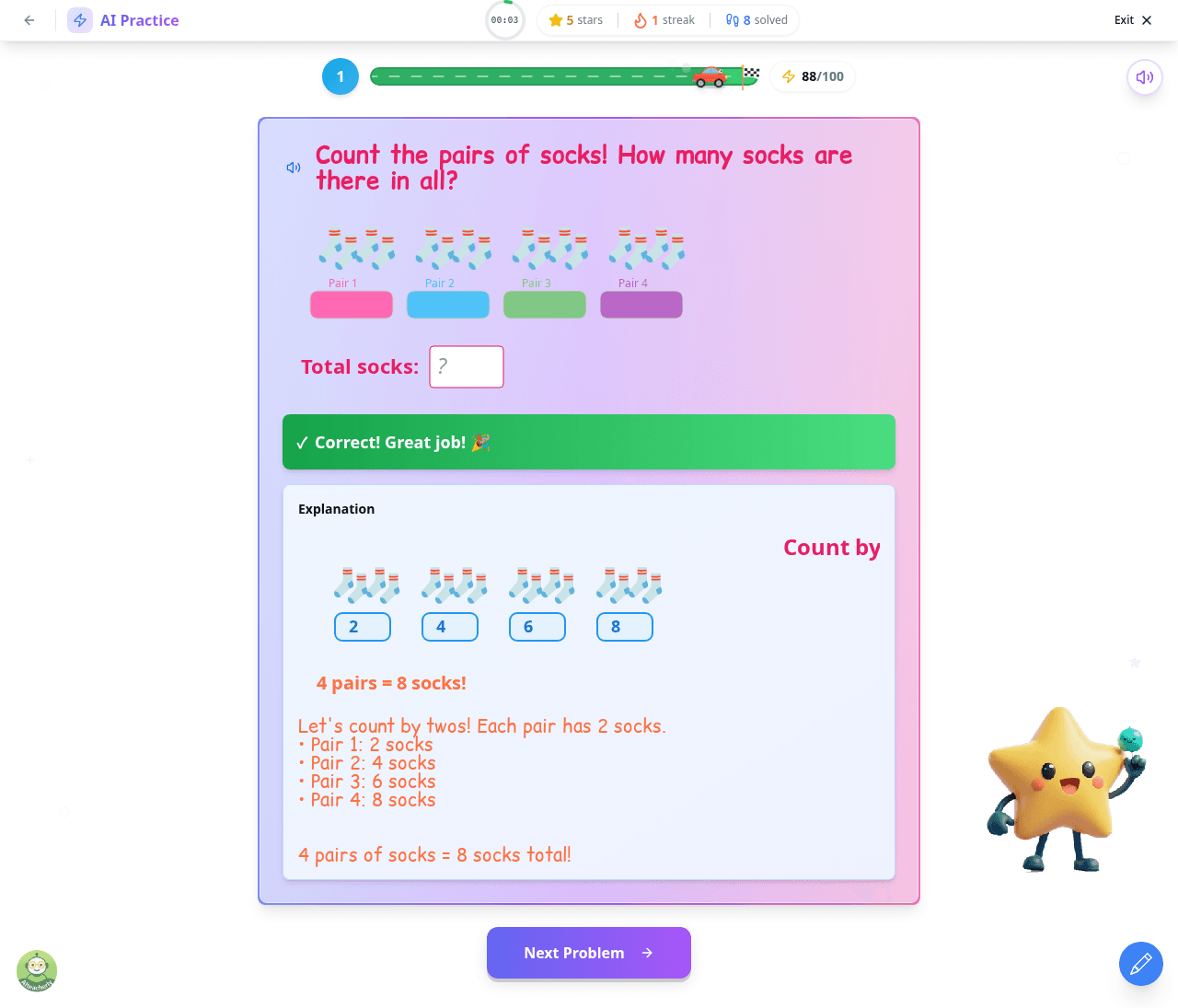
One of the most effective ways to teach young learners is by anchoring abstract math concepts to tangible, physical items. Our homes are naturally overflowing with paired objects: shoes in the entryway, socks fresh out of the dryer, and mittens ready for winter. When a child groups four pairs of shoes and counts them as 2, 4, 6, 8, they experience the mathematical reality of twos firsthand. This tactile connection bridges the gap between rote memorization and true mathematical comprehension. When children can see and touch two items acting as a single unit, counting by twos becomes intuitive rather than intimidating.
3 Fun Hands-On Games to Practice Counting by Twos at Home
Turning math practice into play is the best way to keep young learners motivated and eager. Here are three simple, hands-on games you can try at home today. First, the Laundry Sock Race: challenge your child to match and count clean socks in pairs as fast as they can. Second, the Staircase Step-Up: have your child climb stairs while counting aloud by twos on every second step. Third, the Toy Parade: line up stuffed animals in pairs and skip-count down the line. The interactive problem below shows exactly how pair-counting works in practice.
Overcoming Common 1st-Grade Counting Roadblocks
It is entirely normal for first graders to experience moments of hesitation when shifting from counting by ones to skipping numbers. Children often worry they are missing something when they skip a number in sequence. If your child hesitates, do not rush to give them the answer. Instead, slow down and return to physical manipulatives. Have them touch each pair of objects again while speaking the number clearly. Patience and consistent, low-pressure reinforcement will quickly build their confidence and smooth out any counting bumps.
Boost Math Confidence with AI-Powered Learning Support
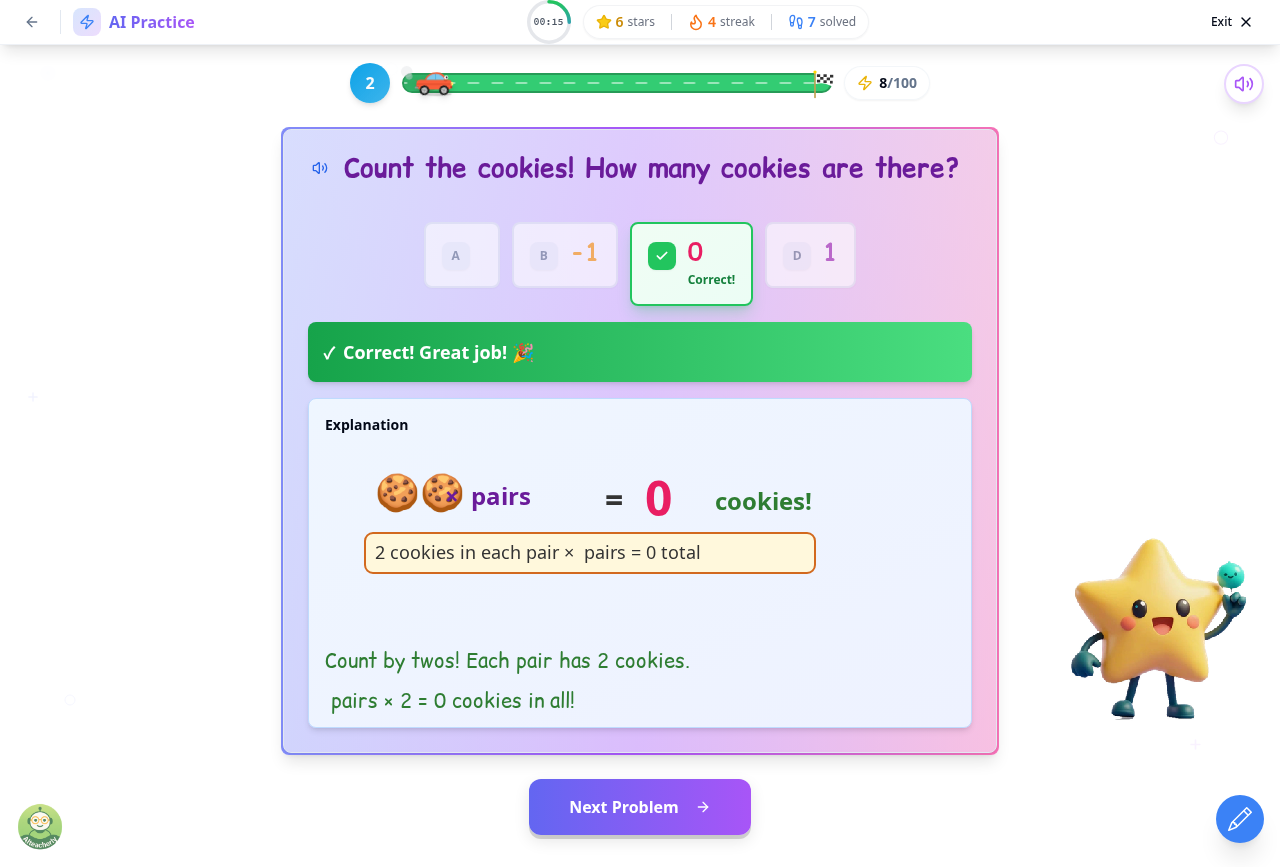
While hands-on games at home are invaluable, combining them with structured digital practice can accelerate your child's progress. Modern EdTech tools provide safe, engaging environments where children can practice skip counting at their own pace with instant, encouraging feedback. Here's what the full interactive lesson looks like on AI Teacherly:

Frequently Asked Questions About Skip Counting by Twos
Mastering early math concepts sets the stage for lifelong academic confidence. By replacing flashcard fatigue with engaging games, everyday household objects, and supportive digital tools, you can transform math time into your child's favorite part of the day. Embrace these playful strategies, celebrate small victories, and watch your first grader thrive in their mathematical journey!
Key Takeaways
- Count by twos 1st grade mastery begins by utilizing everyday paired household items like socks and shoes.
- Skip counting speeds up arithmetic and lays the groundwork for future multiplication concepts.
- Hands-on games eliminate math anxiety and turn routine chores into engaging learning moments.
- Interactive digital platforms reinforce tactile learning with immediate feedback and visual rewards.
- Consistent 15-minute daily practice sessions yield better retention than occasional long study blocks.
Frequently Asked Questions
What is skip counting by twos and why is it important for 1st graders?
Skip counting by twos is the process of counting forward or backward by adding or subtracting two each time (2, 4, 6, 8...). It builds essential 1st-grade number sense and lays the foundational mental math skills required for future multiplication and addition fluency.
How can I teach my 1st grader to count by twos using household items?
You can use everyday paired household items like socks, shoes, gloves, and earrings. Ask your child to group items in pairs and count them aloud by twos as they touch each pair, turning ordinary laundry time into an engaging math activity.
Why does my child struggle to transition from counting by ones to twos?
It is completely normal for 1st graders to default to counting by ones because it feels safer. Bridging this gap requires tactile practice with actual physical pairs so they visually understand that a pair already represents two items combined.
Is skip counting by twos related to multiplication?
Yes! Skip counting by twos is the direct building block for multiplication tables and repeated addition. Mastering this pattern early helps children grasp multiplication concepts effortlessly in later elementary grades.
How many minutes a day should my 1st grader practice counting by twos?
For first graders, 15 to 20 minutes of focused, playful practice daily is ideal. Short, consistent sessions keep children engaged without causing burnout or math frustration.
What should I do if my child gets confused during skip counting practice?
If your child gets stuck, step back to concrete objects. Have them physically point to each pair of shoes or socks while reciting the number sequence together, reinforcing the visual link between the item and the count.
Ready to make math practice a breeze? Discover engaging, interactive 1st-grade lessons on AI Teacherly today!