Counting Forward for First Graders: Fun Ways to Build Early Math Confidence
Discover fun, simple ways to teach counting forward to your first grader. From stair-step counting to interactive digital lessons, build early math confidence in just 5 minutes a day.
The Counting Skill That Powers All Math Learning
That moment when your child counts "1, 2, 3..." without hesitation? It's not just adorable. It's the foundation of every math skill they'll ever learn.
Counting forward for first graders is more than just reciting numbers. It's the essential building block that leads to addition, subtraction, and number sense. When children master counting forward, they develop the confidence to tackle more complex math concepts later on.
The good news? You don't need to be a math teacher to support this skill at home. With just 5 minutes a day of playful practice, you can make a real difference in your child's early math journey.
In this guide, you'll discover:
- Why counting forward matters for long-term math success
- Five simple activities you can do at home today
- Common mistakes first graders make (and how to gently correct them)
- Signs your child is ready to move to the next level
Let's turn counting practice into something your child actually looks forward to!
What Is Counting Forward and Why Does It Matter for First Graders?
Counting forward means saying numbers in order from a starting point, moving up the number sequence. For first graders, this typically means counting from any number up to 100 or beyond.
But here's what many parents don't realize: counting forward isn't just about memorizing a sequence. It's about understanding that each number represents one more than the one before. This concept, called "number sense," is the foundation for all arithmetic.
Why Counting Forward Is Critical for Math Success
When your child counts forward fluently, they're building mental pathways that directly support:
- Addition: Understanding that 5 + 3 means "start at 5 and count forward 3 more"
- Subtraction: Recognizing the inverse relationship of counting backward
- Number patterns: Seeing how numbers relate to each other
- Problem-solving: Developing confidence to approach new math challenges
Research shows that children who struggle with basic counting often develop math anxiety later. But when counting becomes automatic and fun, it creates a positive foundation that carries through their entire academic journey.
What First Graders Should Know
By the end of first grade, most children should be able to:
- Count forward from any number up to 120
- Understand "what comes next" when given a number
- Recognize patterns in number sequences
- Count by 2s, 5s, and 10s (an extension of counting forward)
If your child is still working on these skills, don't worry. Consistent, playful practice makes all the difference.
How to Teach Counting Forward at Home: 5 Simple Activities
The secret to teaching counting forward is making it feel like play, not practice. Here are five activities that disguise learning as fun.
1. The Stair Step Count
Every time you climb stairs together, start counting from a different number. "Today let's start at 7!" Count each step: 7, 8, 9, 10... This builds the skill of counting on from any starting point, not just from 1.
2. Snack Time Sequences
When giving your child crackers or fruit slices, have them count as you place each piece. "You have 4 crackers. Here comes another one. What number is it now?" This connects counting to real quantities.
3. The "What Comes Next?" Game
Say a number and ask your child to quickly name the next one. Start easy: "I say 5, you say...?" As they improve, use larger numbers or turn it into a rapid-fire challenge. This builds automaticity, which is key for math fluency.
4. Number Hunt Around the House
Find numbers on clocks, calendars, remote controls, and appliances. When you spot a number, ask: "What comes after 23?" or "What number is right before this one?" Real-world number exposure reinforces counting skills naturally.
5. Interactive Digital Practice
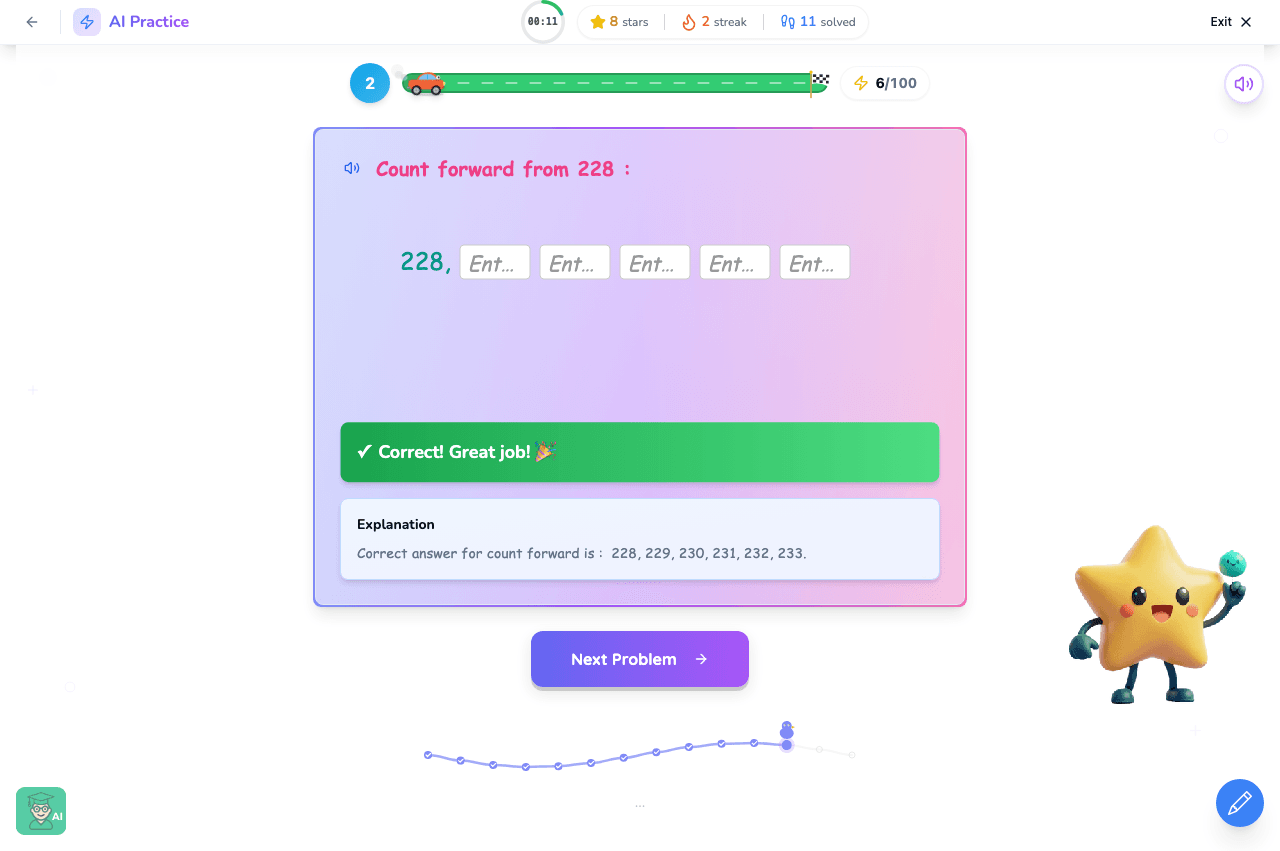
Platforms like AI Teacherly offer structured counting exercises that provide instant feedback. The interactive "fill in the blank" format shown below keeps kids engaged while building the "what comes next" skill systematically.
The counting practice problem below shows exactly how these interactive exercises work:
Common Counting Mistakes and How to Gently Correct Them
Every first grader makes counting errors. Understanding why these mistakes happen helps you respond with patience and effective guidance.
Skipping Numbers
What it looks like: "10, 11, 12, 14, 15..."
Why it happens: Children often skip numbers they find harder to remember (13 is a common one) or lose focus mid-sequence.
How to help: Slow down and use a rhythmic, sing-song voice. Point to objects as you count together. When a skip happens, gently say, "Let's try that part again. After 12 comes...?" and wait for them to self-correct.
Getting Stuck at Decade Transitions
What it looks like: "18, 19... um... twenty-ten?"
Why it happens: The transition from 19 to 20 (and 29 to 30, etc.) requires remembering a new "family" of numbers. This is genuinely challenging!
How to help: Practice decade transitions specifically. Use a hundred chart so children can see the pattern visually. Celebrate when they nail a tricky transition.
Counting Too Fast
What it looks like: Racing through numbers and losing track or making errors.
Why it happens: Excitement, trying to impress, or not connecting each number to a real quantity.
How to help: Model slow, deliberate counting. Add a physical component like touching objects or clapping. Speed comes naturally once accuracy is solid.
Repeating Numbers
What it looks like: "5, 6, 7, 7, 8..."
Why it happens: Loss of focus or uncertainty about what comes next.
How to help: Practice shorter sequences first. Use visual aids like number lines. Interactive digital lessons are especially helpful here because they provide immediate feedback when a number is repeated.
See How Interactive Counting Practice Works
While hands-on activities are wonderful, interactive digital practice offers something unique: instant feedback and consistent repetition without parent fatigue.
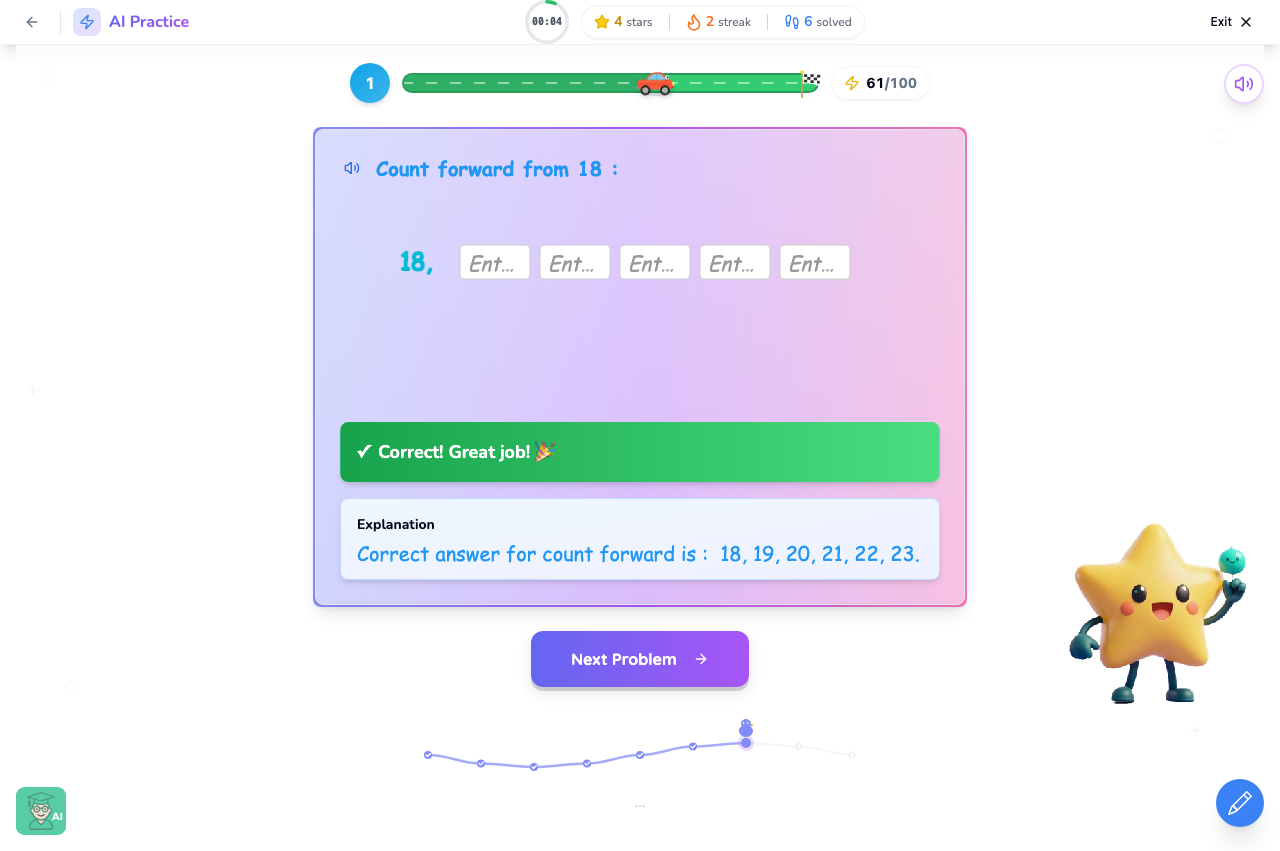
On AI Teacherly, the Count Forward lesson for Grade 1 uses a "what comes next?" approach that builds anticipation and engagement. Rather than passively watching, children actively fill in blanks to complete number sequences.
Here's what the full interactive lesson looks like on AI Teacherly:
Why Interactive Practice Works
Immediate feedback: Children know right away if they're correct, allowing them to self-correct before mistakes become habits.
Personalized pacing: Kids can take their time or move quickly based on their comfort level.
Repetition without boredom: The digital format keeps practice fresh, even when covering the same skill multiple times.
Confidence building: Each correct answer provides a small win, building the positive association with math that prevents anxiety later.
The lesson breaks counting into individual steps ("the number that comes right after is the next one") rather than asking children to recite entire sequences at once. This scaffolded approach helps struggling counters succeed while still challenging advanced learners.
How to Use It at Home
Set aside 5 to 10 minutes for focused practice. Sit with your child initially to celebrate their progress, then gradually let them work independently as confidence grows. The goal is making counting forward feel like a game they're winning, not homework they're enduring.

Signs Your Child Is Ready for the Next Step
How do you know when counting forward has clicked? Look for these signs that your first grader is ready to level up.
Mastery Indicators
- Automaticity: They answer "what comes after 47?" without hesitating
- Flexibility: They can start counting from any number, not just 1
- Self-correction: They catch their own mistakes and fix them
- Confidence: They approach counting activities eagerly rather than reluctantly
What Comes Next After Counting Forward
Once counting forward feels easy, your child is ready for:
Counting backward: The natural inverse that prepares them for subtraction
Skip counting: Counting by 2s, 5s, and 10s (foundation for multiplication)
Number comparison: Understanding which numbers are greater or smaller
Simple addition: Using counting forward as a strategy ("Start at 6, count up 3 more")
When to Seek Extra Support
Most first graders develop counting fluency with regular practice. However, consider talking to your child's teacher if:
- They consistently struggle with number order despite daily practice
- They show significant frustration or anxiety around counting
- They can't count past 20 by mid-first grade
- They confuse number names regularly (calling 15 "fifty" for example)
Early intervention for counting difficulties is highly effective. The sooner challenges are addressed, the easier they are to overcome.
Key Takeaways
- Counting forward is the foundation for addition, subtraction, and all future math skills
- First graders should be able to count forward from any number up to 120 by year's end
- Turn everyday moments into counting practice: stairs, snacks, and number hunts make learning fun
- Common mistakes like skipping numbers or getting stuck at decade transitions are normal and correctable
- Interactive digital lessons provide instant feedback that helps children self-correct and build confidence
- Just 5 minutes of daily counting practice can make a measurable difference in math fluency
- Watch for signs of mastery: automaticity, flexibility, and self-correction indicate readiness for the next level
Frequently Asked Questions
What is counting forward and why is it important for first graders?
Counting forward means saying numbers in sequence from any starting point. It's the foundation for addition, subtraction, and number sense. Mastering this skill early prevents math anxiety and builds confidence for all future math learning.
How high should a first grader be able to count?
By the end of first grade, most children should count forward from any number up to 120. They should also understand 'what comes next' without hesitating and recognize basic number patterns.
What are easy ways to practice counting forward at home?
Count stairs from different starting points, play 'what comes next' games, do number hunts around the house, count snacks as you serve them, and use interactive apps like AI Teacherly for structured digital practice.
Why does my child skip numbers when counting?
Number skipping is common in first graders. It happens when children lose focus or encounter numbers they find harder to remember (like 13 or 15). Slow down, use a rhythmic voice, and practice tricky sequences specifically.
How can I make counting practice fun instead of boring?
Disguise practice as games! Turn stair climbing into counting challenges, make snack time a number activity, or use interactive digital lessons that provide instant feedback and feel like playing rather than studying.
When should I be concerned about my child's counting skills?
Talk to your child's teacher if they can't count past 20 by mid-first grade, show significant frustration or anxiety around counting, or consistently confuse number names despite regular practice.
What comes after counting forward in first grade math?
Once counting forward is mastered, children move to counting backward (prepares for subtraction), skip counting by 2s, 5s, and 10s (foundation for multiplication), number comparison, and simple addition strategies.
How long should my first grader practice counting each day?
Just 5 to 10 minutes of focused, playful counting practice daily is ideal. Short, consistent sessions are more effective than occasional long practice. Interactive lessons help maintain engagement during this time.
Ready to make counting forward fun for your first grader? Try the interactive Count Forward lesson on AI Teacherly, where instant feedback and engaging exercises turn practice into play. Start your child's math confidence journey today!