Cracking 5th Grade Decimal Word Problems: A Parent's Guide to PEMDAS
Master 5th grade decimal math at home! Discover easy strategies for tackling mixed operations, PEMDAS, and multi-step word problems without the frustration.

Introduction: Unlocking the Mystery of 5th Grade Decimals
Fifth-grade mathematics introduces students to a whole new level of numerical reasoning. Among the most challenging hurdles in the curriculum is mastering 5th grade decimal word problems that involve mixed operations. When addition, subtraction, multiplication, and division all collide within a single multi-step math problem, students often feel overwhelmed. The good news is that mastering decimals does not require endless worksheet drills or frustrating kitchen-table arguments. By breaking down equations into structured steps and connecting math to everyday scenarios, parents can guide their children toward true mathematical confidence. This guide explores proven strategies to demystify decimal operations and make math practice an empowering experience.
What Are Mixed Operations with Decimals and Why Are They Tricky?
In earlier grades, students learned how to add, subtract, multiply, and divide decimals in isolated lessons. Fifth grade changes the game by combining these skills. A single problem might require multiplying the cost of movie tickets by a decimal amount, adding concession snacks, and subtracting a promotional discount. This integration is what makes mixed operations with decimals tricky. Students must not only calculate accurately with decimal place values but also decide which operation to perform first. Without a reliable strategy, small errors in decimal placement can cascade into wildly incorrect final answers. Recognizing that these challenges stem from managing multiple cognitive steps at once helps parents approach homework time with greater patience and empathy.
Decoding PEMDAS: The Golden Rule for Decimal Expressions
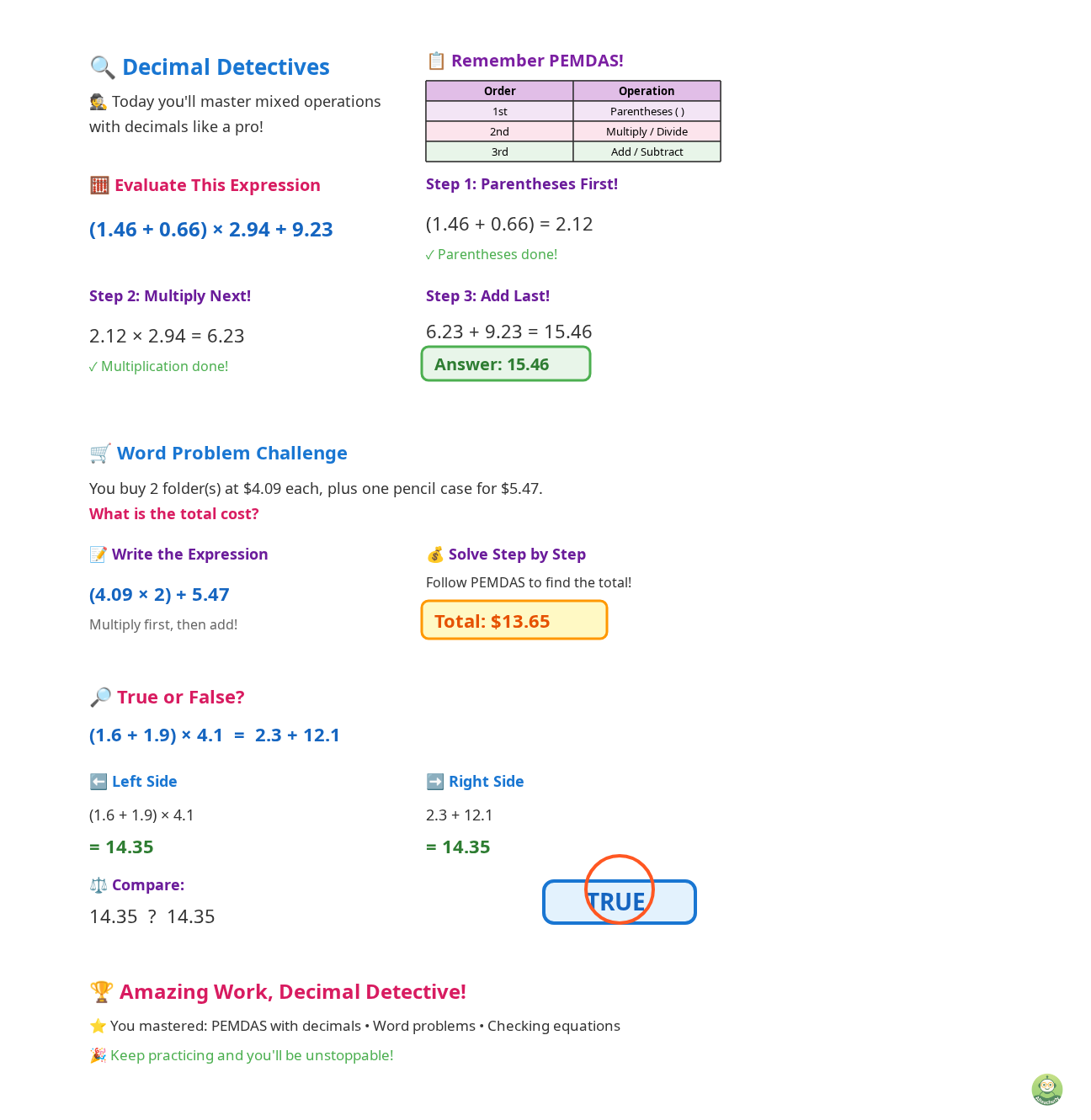
When tackling expressions with multiple operations, the order of operations is your ultimate roadmap. Commonly known as PEMDAS, the rule dictates that parentheses take top priority, followed by multiplication and division from left to right, and finally addition and subtraction from left to right. When decimals enter the equation, this sequence becomes even more crucial. For example, evaluating 4.5 + 2.1 × (3.2 - 1.0) requires evaluating the parentheses first. Letting students practice these rules in isolation before combining them prevents frustration. Remind your child that math is like a game with rules; following the sequence ensures everyone arrives at the exact same correct answer, no matter how complex the numbers look.
Step-by-Step: How to Tackle Multi-Step Decimal Word Problems
Word problems can strike fear into the hearts of even enthusiastic learners. To conquer multi-step decimal word problems, students need a repeatable attacking plan. First, encourage your child to read the entire problem twice without touching a pencil, picturing the story in their head. Second, highlight key numbers and operation words like total, per, remaining, and shared. Third, write out the math expression step by step rather than trying to calculate everything in your head. The interactive problem below shows exactly how PEMDAS works in practice when breaking down multi-step calculations. By tackling one operation at a time, children transform intimidating paragraphs into manageable math puzzles.
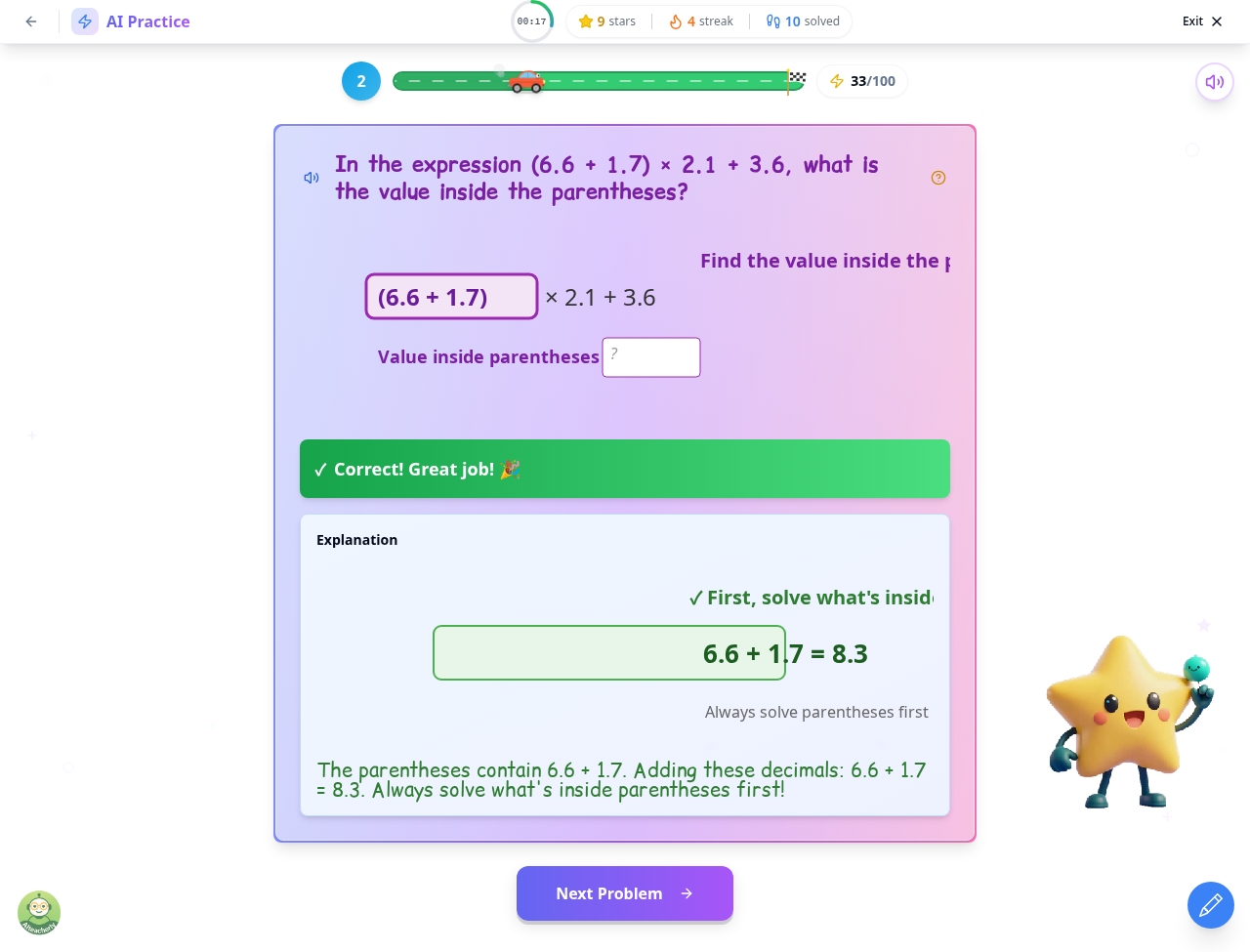
Interactive Practice: Making Math Feel Like a Detective Game
Traditional paper worksheets often fail to engage modern learners who crave interaction and immediate feedback. Digital learning tools transform abstract decimal math into an engaging detective game where every correct calculation unlocks the next clue. In platforms like AI Teacherly, students receive scaffolded hints, visual manipulatives, and instant validation that reinforce correct habits. Here's what the full interactive lesson looks like on AI Teacherly: In the Mixed Operations with Decimals lesson (Grade 5), students explore authentic scenarios that build both operational fluency and financial literacy. This active engagement bridges the gap between mechanical computation and true conceptual understanding.
Key Takeaways
- Always follow PEMDAS rules: Parentheses, Exponents, Multiplication/Division, and Addition/Subtraction.
- Connect abstract decimal calculations to real-world scenarios like shopping and budgets.
- Estimate answers before computing to catch decimal misplacement errors early.
- Use interactive digital lessons like AI Teacherly to provide immediate feedback and visual scaffolding.
- Break multi-step word problems down into smaller, manageable single-operation equations.
Frequently Asked Questions
What is the correct order of operations for decimals?
The correct order of operations for decimals is PEMDAS: Parentheses first, then exponents, multiplication and division from left to right, and finally addition and subtraction from left to right. Decimal points do not change this universal order.
How do you solve multi-step decimal word problems?
To solve multi-step decimal word problems, first read the entire prompt to understand the goal. Identify key quantities, translate sentences into numerical expressions following PEMDAS, and double-check decimal alignments during computation.
Why does PEMDAS matter when working with decimal numbers?
PEMDAS is critical for decimals because performing operations out of sequence changes decimal placement entirely. Parentheses ensure that grouping (such as total shopping costs before tax or discounts) is calculated accurately.
How can I help my 5th grader practice decimal operations at home?
You can help your child by connecting decimals to real-world scenarios like grocery shopping, budgeting, and movie ticket costs. Using interactive platforms like AI Teacherly also provides immediate visual feedback.
What is the most common mistake students make with mixed decimal operations?
The most common mistake is misaligning decimal points during addition and subtraction, or forgetting to count decimal places accurately when multiplying. Estimating the answer beforehand prevents wild calculation errors.
What are mixed operations with decimals in 5th grade math?
Mixed operations combine addition, subtraction, multiplication, and division in a single problem. When decimals are introduced, students must track place values across different operations while applying correct sequence rules.
Ready to transform decimal practice into an engaging adventure? Try the Mixed Operations with Decimals lesson free on AI Teacherly today!