Master Multiplication Using Number Lines: A Parent's Guide
Tired of multiplication flashcards and tears? Discover how number lines and skip-counting turn third-grade math homework into a fun visual game.
Why Multiplication Feels Hard for 3rd Graders And How to Fix It
Every third-grade parent knows the exact moment the math curriculum shifts from simple addition to multiplication. Suddenly, flashcards appear at the kitchen table, timed quizzes cause anxious sighs, and rote memorization takes center stage. But multiplication does not have to be an uphill battle of memorizing abstract tables. When children struggle with multiplication, the root cause is rarely a lack of ability. Instead, it is a disconnect between abstract numbers on a page and real quantity. If your child can count and skip-count, they already possess every skill needed to master multiplication. The secret lies in changing how math is visualized, moving away from stressful drills and toward tactile, visual methods that make complete intuitive sense.
What Is Multiplication on a Number Line and Why Does It Work
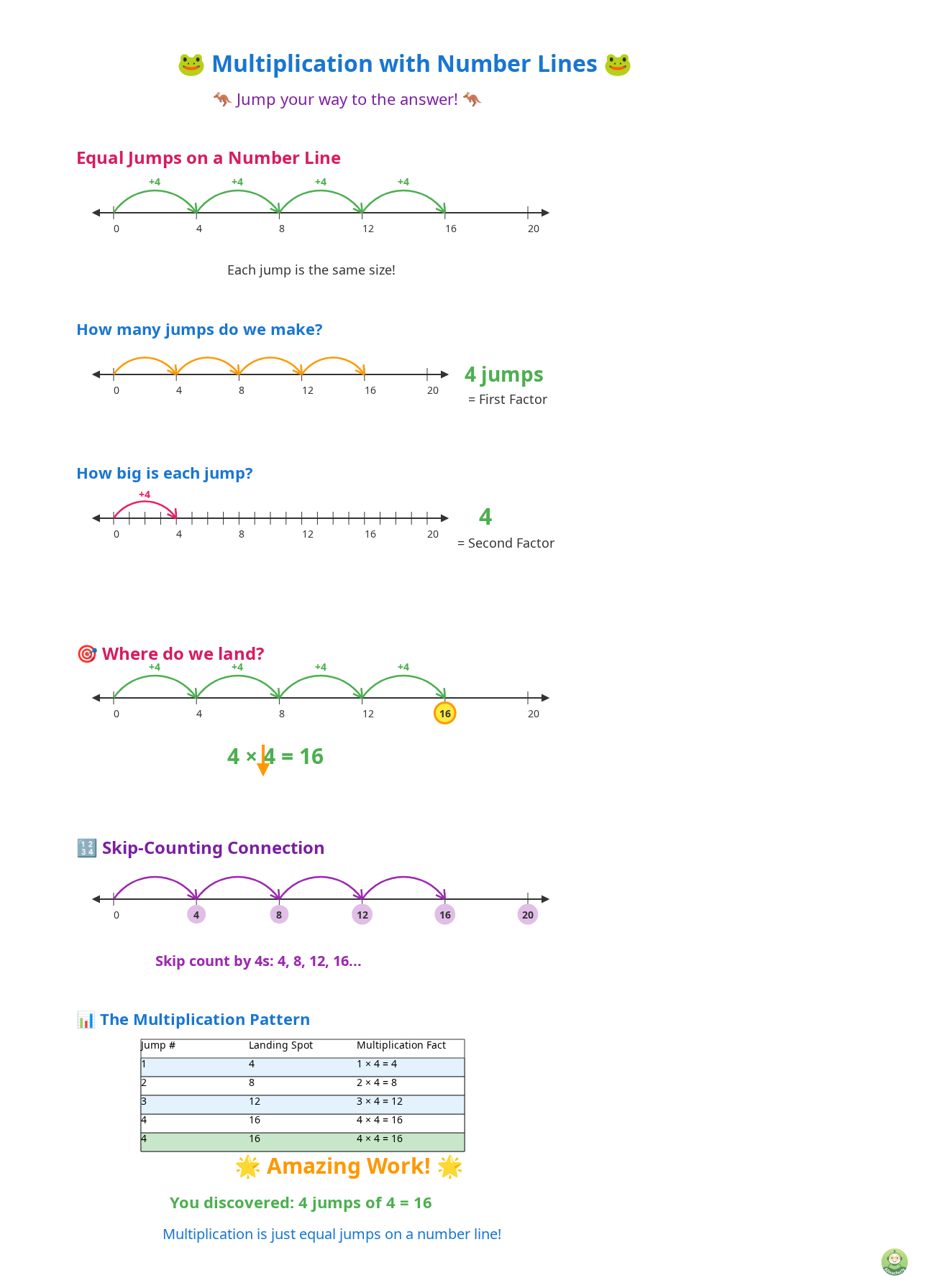
Multiplication on a number line is a visual method where children represent multiplication equations as a series of equal-sized hops or jumps along a numbered straight line, starting from zero. In third-grade mathematics, this model bridges the gap between repeated addition and true multiplication. When a child sees 3 times 4 as three separate hops of four units each landing at twelve, numbers stop being invisible symbols and become physical distances. Research shows that visual manipulatives and number line models improve conceptual math retention by forty percent compared to worksheet-only practice. By transforming equations into journeys across a landscape, children build mental number lines that support all future mathematical problem-solving.
How Skip-Counting Connects to Multiplication Factors
Skip-counting is the secret doorway to understanding multiplication factors. When kids skip-count by twos, threes, or fives, they are actually reciting the landing points of multiplication jumps on a number line. If a child makes four jumps of three, they count three, six, nine, twelve. Each landing point corresponds directly to the product of a multiplication equation. Here's what the full interactive lesson looks like on AI Teacherly: When children speak the skip-counting sequence while watching jumps span across the screen, auditory and visual learning reinforce each other seamlessly. They begin to notice patterns, such as how every jump is identical in size, which is the foundational definition of multiplication.
3 Fun Ways to Practice Number Line Multiplication at Home
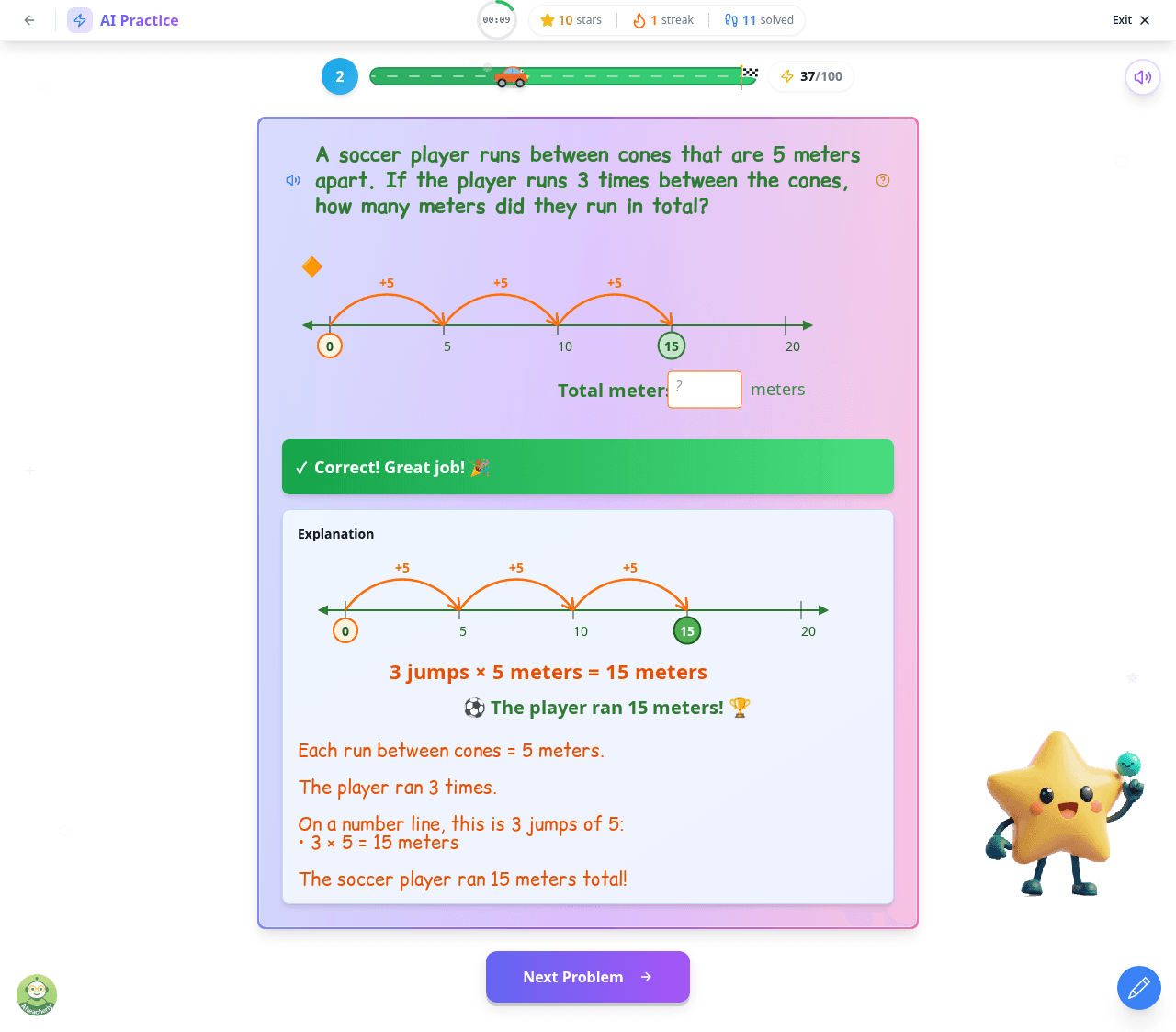
Bringing math off the paper and into everyday play makes abstract concepts stick. Here are three effective ways to practice number line multiplication at home without boring drills. First, draw a giant number line on your driveway with sidewalk chalk and challenge your child to hop like a frog in equal groups of two or three. Second, use building blocks to jump along a ruler or tape measure laid on the floor. Third, explore interactive digital lessons that gamify the experience. The interactive problem below shows exactly how multiplication number lines work in practice: On AI Teacherly, students drag and drop jump markers to solve puzzles, receiving immediate encouragement and visual feedback that builds confidence instantly.

Common Parent Pitfalls When Teaching Multiplication
Even with wonderful visual tools like number lines, parents sometimes fall into common traps when helping with homework. One frequent mistake is rushing children straight to the numerical equation before they have described the visual story. Always ask your child to explain what the jumps represent first. How big is each jump? How many jumps did the frog make? Another pitfall is treating number lines as just another way to count by ones. Remind your child that multiplication jumps must always be equal in size. If the first jump is three units, every subsequent jump must also be three units. Patience and curiosity transform these small corrections into breakthrough learning moments.
Key Takeaways
- Treat multiplication as equal jumps rather than abstract memorization to build long-term number sense.
- Connect skip-counting directly to number line landings so children hear and see the math pattern simultaneously.
- Incorporate tactile activities like sidewalk chalk hopscotch or interactive digital lessons to keep practice engaging.
- Focus on understanding the meaning of both factors (group size and number of groups) before writing equations.
- Keep practice sessions short and consistent, aiming for twenty minutes of focused visual exploration daily.
Frequently Asked Questions
What is multiplication on a number line for 3rd grade?
Multiplication on a number line is a visual method where kids represent multiplication equations as a series of equal-sized hops or jumps along a numbered straight line, starting from zero.
How do skip-counting and multiplication connect on a number line?
Skip-counting provides the numerical sequence for multiplication jumps. If you skip-count by threes (3, 6, 9, 12), each number corresponds to landing on 3, 6, 9, and 12 after making jumps of size three on a number line.
How can I help my 3rd grader practice multiplication without flashcards?
You can use sidewalk chalk to draw giant number lines outside, have children hop like frogs in groups of equal size, or use interactive online lessons on AI Teacherly that make visual math engaging and fun.
Why is my child struggling to read multiplication word problems with number lines?
Word problems often hide the equal groups inside stories. Teach your child to identify the group size (the jump length) and the number of groups (the number of jumps) before drawing or solving on the line.
Are visual number line models better than rote memorization for kids?
Yes! Visual models build deep conceptual understanding of what numbers represent, whereas rote memorization often leads to forgetting facts under test pressure. Combining both yields the best long-term results.
Is it normal for a 3rd grader to find multiplication concepts difficult at first?
Completely normal. Shifting from addition to multiplication requires a new way of thinking about numbers. Using tactile and visual aids like number lines bridges that gap effortlessly.
Ready to make math homework frustration-free? Explore interactive multiplication lessons and visual number line activities free on AI Teacherly today!