Teach Kindergarten Addition at Home: A Fun Parent's Guide to First Math Skills
Discover simple, playful ways to teach your kindergartener addition at home using everyday objects. No worksheets, no flashcards, just fun activities that make math click.
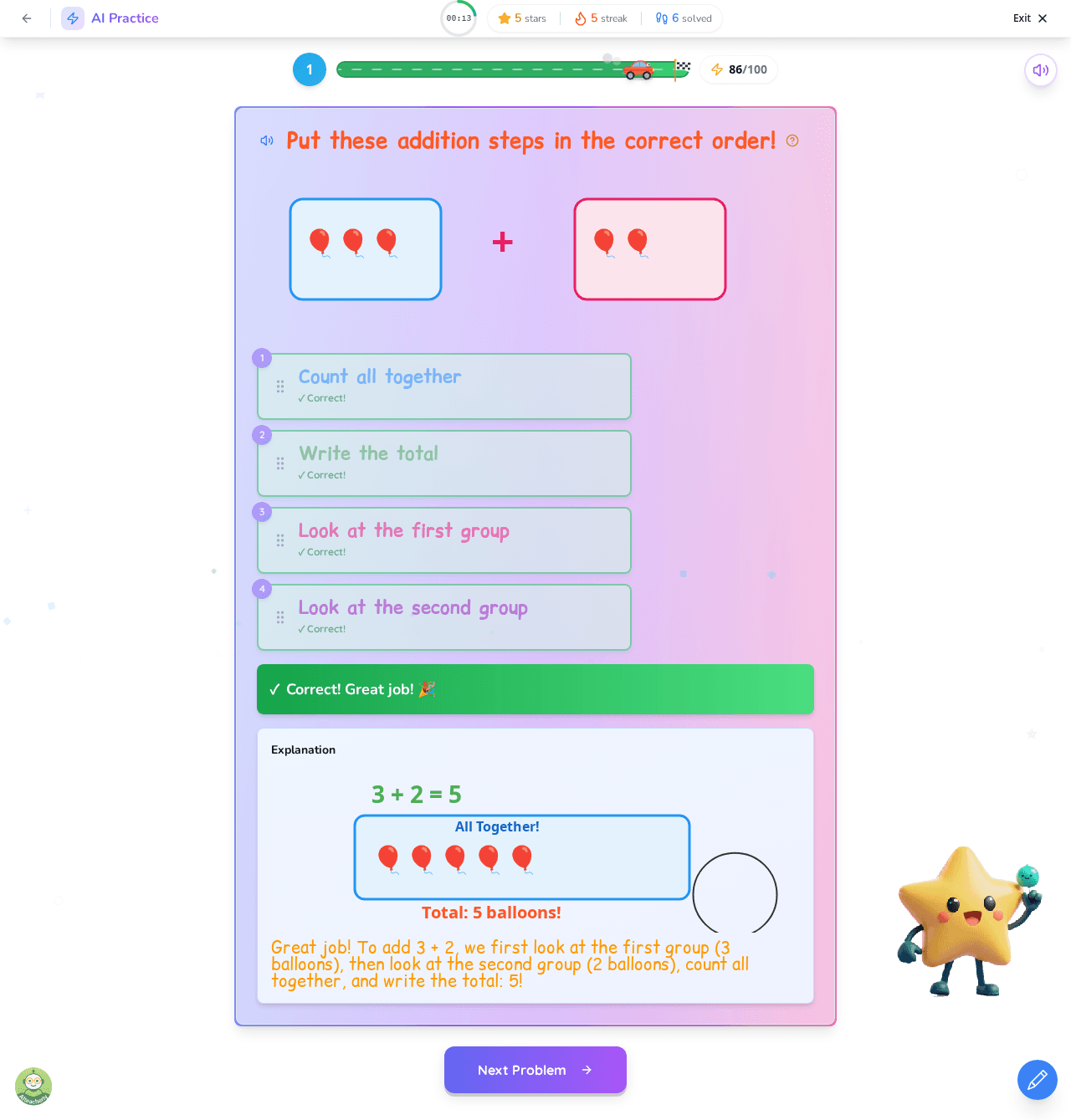
Your Kindergartener's First Math Adventure Starts at Home
Your kindergartener is ready to learn addition, and here's the wonderful news: you don't need flashcards, workbooks, or a teaching degree to get started. With toys they already love and just five minutes of playful practice, you can introduce this foundational math skill in a way that feels like fun, not homework.
Many parents feel anxious about teaching math concepts, worrying they might confuse their child or teach something the "wrong way." But at the kindergarten level, addition is beautifully simple. It's just about putting things together. If you can count to five and push some toys into a pile, you can teach addition.
In this guide, you'll discover exactly how to teach kindergarten addition at home using everyday household items. We'll walk through the proven progression that teachers use (objects first, then pictures, then symbols), share practical activities you can start today, and help you understand what's actually age-appropriate for your 5-year-old. By the end, you'll feel confident guiding your child through their first addition experiences.
What Is Addition for Kindergarteners?
Addition for kindergarteners is simply the concept of "putting groups together." That's it. When your child combines two piles of blocks and counts how many they have in total, they're doing addition. When they take three crackers and then grab two more, then count all five, that's addition in action.
At this age, children don't need to memorize math facts or recite equations. They need to understand that when we combine two groups, we get a new, larger group. This concrete understanding is the foundation for all future math learning.
What should kindergarteners know about addition? By the end of kindergarten, children typically work with sums up to 5 (like 2 + 3 = 5). Some may progress to sums of 10, but the focus remains on understanding the concept, not speed or memorization. The good news? This means every addition problem your kindergartener encounters will use small, manageable numbers.
The key vocabulary is equally simple:
- The plus sign (+) means "put together"
- The equals sign (=) means "the same as"
When children understand these symbols as actions rather than abstract math notation, everything clicks into place.
How Do I Teach My Kindergartener Addition at Home?
The most effective approach to teaching kindergarten addition at home is using physical objects before ever showing a number or symbol. Research shows that hands-on learning improves math understanding significantly compared to worksheet-only methods. Here's your step-by-step guide:
Step 1: Start with Two Groups Place some objects in front of your child, separated into two clear groups. Use anything you have: toy cars, LEGO bricks, apple slices, crayons. Say, "Look, you have 2 cars here and 3 cars here."
Step 2: Count Each Group Together Point to each object as you count the first group together: "1, 2 cars." Then count the second group: "1, 2, 3 cars."
Step 3: Combine and Count Again Push the groups together while saying, "Now let's put them together!" Then count the combined group: "1, 2, 3, 4, 5. We have 5 cars!"
Step 4: Celebrate and Repeat Make it exciting! "You just did addition! When we put 2 and 3 together, we got 5!" Repeat with different numbers and objects, always keeping sums at 5 or below initially.
The magic happens when children make the connection themselves: combining counted groups creates a new total they can count.
The Secret Progression: Objects to Pictures to Symbols
There's a reason teachers don't start with worksheets full of "2 + 3 = ___" problems. Children need to build understanding through a specific progression, and rushing to symbols too quickly causes confusion. Here's the proven path:
Stage 1: Concrete Objects (Start Here) Children manipulate real, physical items they can touch, move, and count. This stage should last several weeks at minimum. Use building blocks, toy animals, snacks, coins, buttons, or anything countable around your home.
Stage 2: Pictures and Representations Once your child confidently combines objects and counts totals, move to pictures. Draw circles, use stickers, or show images of objects. Your child counts the pictures just as they counted physical items. This bridges the gap between hands-on and abstract thinking.
Stage 3: Symbols and Number Sentences Only after success with pictures should you introduce the addition sentence (2 + 3 = 5). By this point, your child understands what the symbols mean because they've experienced the concept dozens of times.
Why does this order matter? When a child sees "2 + 3 = 5" without the concrete foundation, it's just meaningless symbols. But when they've pushed toys together hundreds of times, the equation becomes a shorthand for something they deeply understand. The plus sign truly means "put together" because they've lived it.
5 Simple At-Home Addition Activities Using What You Already Have
You don't need to buy special math manipulatives or curriculum kits. Here are five engaging addition activities using items already in your home:
1. Snack Time Math During snack time, give your child a few crackers and then add more. "You have 2 crackers. Here come 3 more! Let's count how many you have now." Food makes math delicious and memorable.
2. Toy Car Garage Park toy cars in two separate "garages" (shoe boxes work great). Count the cars in each, then move them all into one big garage. How many cars are parked now?
3. Block Tower Challenge Build two small towers, count the blocks in each, then combine them into one mega tower. The physical act of stacking reinforces the "putting together" concept.
4. Nature Walk Addition Collect items on a walk (pinecones, rocks, leaves). "You found 1 pinecone, and now you found 2 more. How many pinecones do you have?" Real-world contexts make math meaningful.
5. Stuffed Animal Party Arrange stuffed animals into two groups, then invite them all to a "party" in one spot. Count the guests at the party together.
The interactive activity below shows exactly how digital tools can reinforce these same hands-on concepts with colorful visuals and instant feedback.
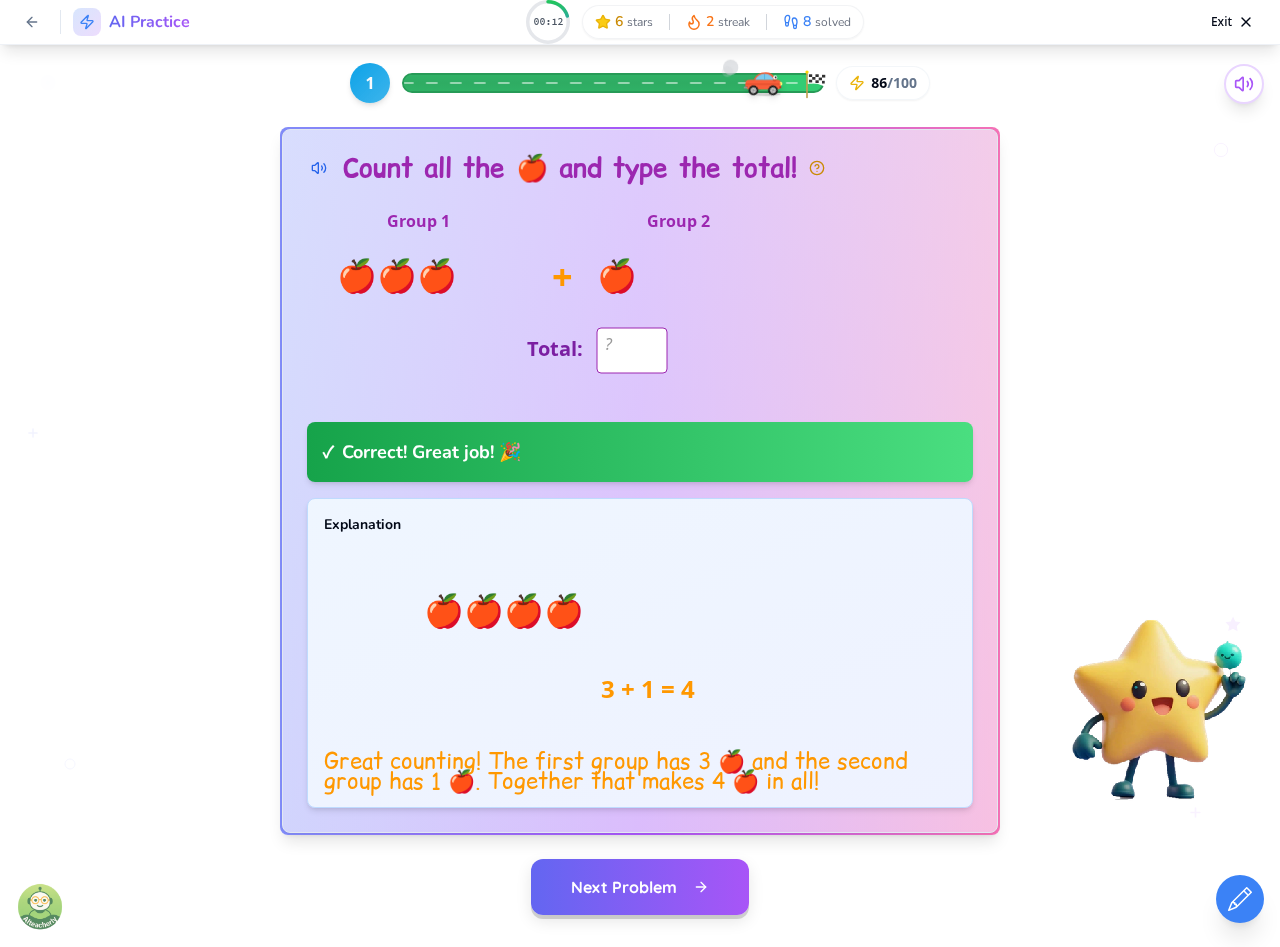
See How Interactive Learning Makes Addition Click
While hands-on practice at home builds the foundation, interactive digital lessons provide something powerful: guided practice with immediate feedback and celebration. Children thrive when they can try, see results instantly, and feel successful.
Here's what the full interactive lesson experience looks like on AI Teacherly:
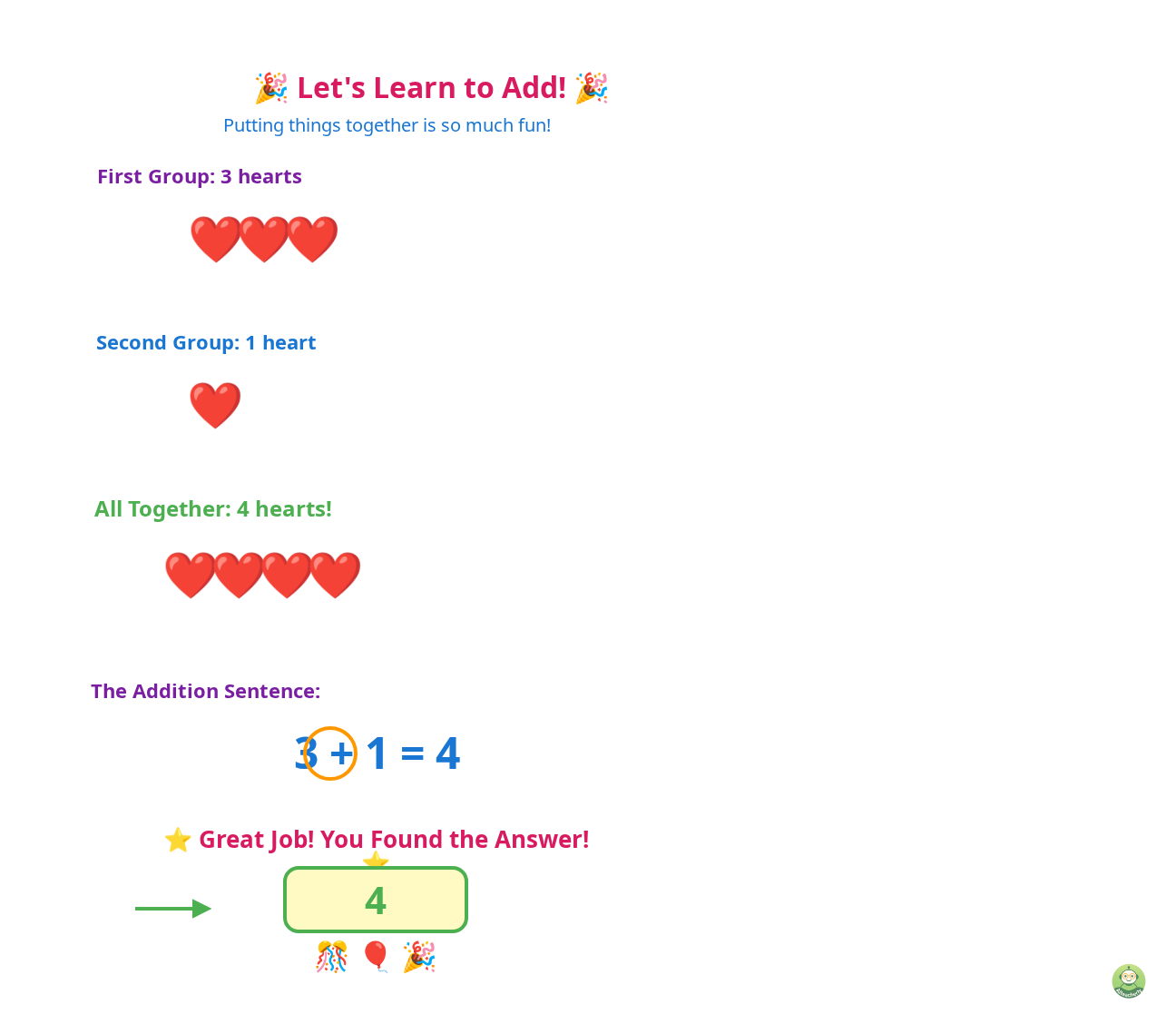
In the Introduction to Addition lesson for Kindergarten, children progress through carefully sequenced activities that mirror the objects-to-symbols progression. They start by counting colorful emoji objects on screen (familiar visuals like apples, stars, and toys), then watch groups combine, and finally see the addition sentence that describes what happened.
What makes interactive learning special for kindergarteners:
- Visual engagement: Bright colors and familiar objects hold attention
- Immediate feedback: Children know right away if they're on track
- Built-in celebration: Success feels exciting, building confidence
- Self-paced progress: No rushing, no pressure from waiting classmates
- Consistent practice: The same high-quality instruction every time
This digital practice beautifully complements your at-home activities. After your child pushes toys together on the floor, they can reinforce the same concept by tapping objects together on screen. The combination of physical and digital learning creates strong, lasting understanding.
Common Mistakes Parents Make (And How to Avoid Them)
Even with the best intentions, parents sometimes make missteps when teaching kindergarten addition at home. Here's what to watch for:
Mistake 1: Starting with Worksheets Jumping straight to written problems ("2 + 3 = ___") before building concrete understanding confuses children. Symbols are meaningless without the physical experience behind them. Always start with objects.
Mistake 2: Rushing the Progression It's tempting to move quickly when your child seems to "get it," but spending extra time at the concrete stage pays dividends later. There's no award for fastest progression. Mastery matters more than speed.
Mistake 3: Sessions That Are Too Long For kindergarteners, 5 to 10 minutes of focused math practice is ideal. Short, consistent sessions beat hour-long cramming every time. When attention wanders, stop and try again tomorrow.
Mistake 4: Using Numbers That Are Too Big Stick to sums of 5 or less until your child demonstrates complete confidence. Moving to sums of 10 before they're ready can undermine the foundation you've built.
Mistake 5: Correcting Mistakes Harshly Wrong answers are learning opportunities, not failures. Instead of "No, that's wrong," try "Let's count together again!" Keeping math positive prevents anxiety from forming early.
Remember: your goal isn't teaching math facts. It's building the understanding that addition means putting groups together. Everything else follows from there.
Key Takeaways
- Addition for kindergarteners is simply "putting groups together" with sums up to 5, making it manageable for parents to teach at home
- Always follow the progression: physical objects first, then pictures, then written symbols (2 + 3 = 5)
- Short practice sessions of 5 to 10 minutes are more effective than longer cramming sessions for young learners
- Use household items like toys, snacks, and blocks for hands-on addition practice that costs nothing
- The plus sign means "put together" and the equals sign means "the same as" in language kindergarteners understand
- Interactive digital tools like AI Teacherly reinforce home learning with immediate feedback and celebration
- Avoid rushing to worksheets or big numbers; mastery of small numbers builds the foundation for future math success
Frequently Asked Questions
What is the best way to introduce addition to a kindergartener?
Start with physical objects like toys or snacks. Have your child count two separate groups, push them together, and count the total. This hands-on approach builds understanding before introducing symbols or written equations.
How high should my kindergartener be able to add?
Kindergarteners typically work with sums up to 5, such as 2 + 3 = 5. Some children progress to sums of 10, but mastering small numbers is more important than reaching larger ones quickly.
Why should I use physical objects instead of worksheets for teaching addition?
Children need concrete experiences before abstract symbols make sense. When kids physically combine objects, the plus sign becomes meaningful. Worksheets without this foundation often lead to confusion and memorization without understanding.
What does the plus sign mean for kindergarteners?
For kindergarteners, the plus sign (+) simply means "put together." This action-based definition helps children connect the symbol to their real experience of combining groups of objects.
How long should kindergarten addition practice sessions be?
Keep sessions between 5 to 10 minutes. Short, consistent daily practice is far more effective than occasional long sessions. Stop when your child's attention wanders and try again the next day.
Is my child behind if they don't understand addition yet?
Not at all. Kindergarteners develop math readiness at different rates. Focus on counting and one-to-one correspondence first. Addition understanding typically develops throughout the kindergarten year with proper support.
What household items can I use to teach addition?
Almost anything countable works: toy cars, LEGO bricks, crackers, grapes, crayons, coins, buttons, stuffed animals, or even socks. Variety keeps practice engaging and shows math is everywhere.
When should I introduce written addition sentences like 2 + 3 = 5?
Introduce written equations only after your child confidently combines physical objects and pictures. This typically means several weeks of hands-on practice first. Rushing to written math causes confusion.
Ready to make addition fun for your kindergartener? Try the free interactive Introduction to Addition lesson on AI Teacherly and watch your child's confidence grow!