Two-Step Word Problems Made Easy: The Hidden Question Trick Every 3rd Grader Needs
Discover the hidden question trick that transforms confusing two-step word problems into manageable steps. Practical strategies for parents to use at home tonight with their 3rd graders.
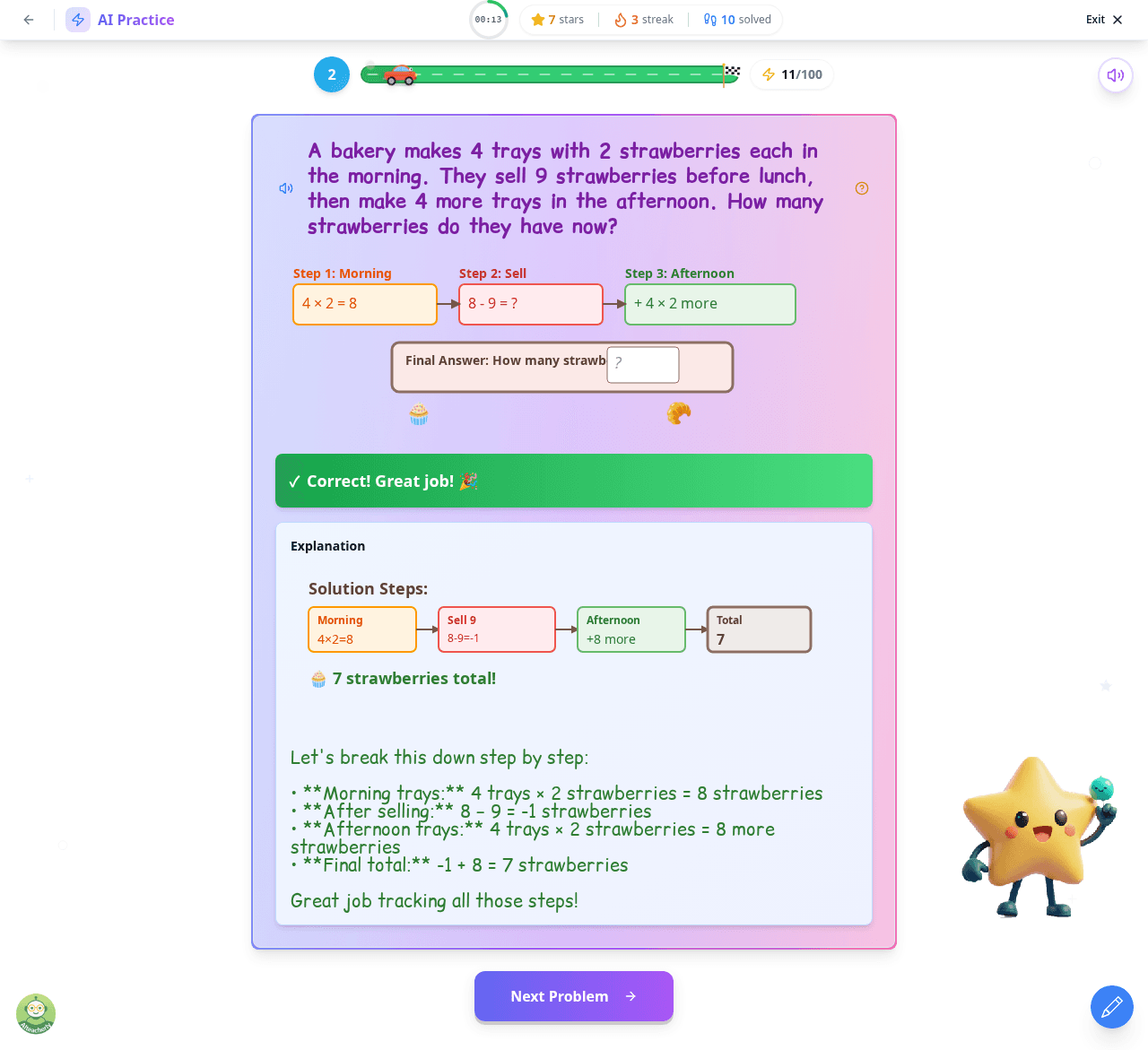
When Word Problems Feel Like Unsolvable Puzzles
You've probably been there: your 3rd grader brings home a math worksheet, takes one look at a word problem, and sighs, "I don't even know where to start." The frustration is real, for both of you.
Two-step word problems mark a significant leap in mathematical thinking. Unlike simple one-step problems where children can quickly identify what to do, these multi-step challenges require kids to juggle multiple pieces of information, choose the right operations, and execute calculations in the correct order. No wonder they feel overwhelming!
But here's the good news: there's a simple strategy that transforms these intimidating problems into manageable pieces. It's called the hidden question technique, and once your child masters it, those confusing word problems become much more approachable.
In this guide, you'll discover exactly how two-step word problems work, why they challenge 3rd graders, and most importantly, practical strategies you can use at home tonight to build your child's confidence and skills.
What Are Two-Step Word Problems and Why Do They Challenge 3rd Graders?
A two-step word problem is exactly what it sounds like: a math problem that requires two separate calculations to find the answer. Instead of asking a straightforward question like "How many apples are left?", these problems weave together multiple pieces of information that must be processed in sequence.
For example, consider this problem: "Maya had 3 packs of stickers with 6 stickers in each pack. She gave 4 stickers to her friend. How many stickers does Maya have now?"
To solve this, your child needs to:
- First: Calculate how many stickers Maya started with (3 × 6 = 18)
- Then: Subtract the stickers she gave away (18 - 4 = 14)
Why These Problems Are Harder
Two-step word problems challenge 3rd graders for several reasons:
- Working memory demands: Children must hold multiple numbers and relationships in their minds simultaneously
- Operation selection: They need to identify which operations to use (add, subtract, multiply, or divide) for each step
- Sequencing: The order of operations matters; doing steps in the wrong order leads to incorrect answers
- Reading comprehension: Understanding the story and extracting relevant information requires careful reading
The transition from single-step to multi-step thinking is one of the biggest cognitive leaps in elementary math. It's completely normal for children to struggle initially.
The Hidden Question Strategy: Your Child's New Secret Weapon
Here's the game-changing insight that transforms how children approach two-step problems: every two-step problem contains a hidden question.
The hidden question is the intermediate step, something your child needs to figure out first before they can answer the main question. Teaching kids to hunt for this hidden question turns overwhelming problems into detective work.
How to Find the Hidden Question
Let's revisit our sticker problem: "Maya had 3 packs of stickers with 6 stickers in each pack. She gave 4 stickers to her friend. How many stickers does Maya have now?"
The main question (stated in the problem) is: How many stickers does Maya have now?
The hidden question (not stated, but necessary) is: How many stickers did Maya start with?
Once your child finds the hidden question, the problem breaks into two simple, manageable steps:
- Answer the hidden question first
- Use that answer to solve the main question
Teaching the Detective Mindset
Encourage your child to ask: "What do I need to figure out before I can answer the final question?"
This single question transforms their approach. Instead of feeling paralyzed by complexity, they become detectives hunting for clues. The hidden question is always the missing piece that connects the given information to the final answer.
Pro tip: Have your child physically write out the hidden question before solving. This simple act of articulation helps cement the strategy.
How to Break Down Two-Step Problems Step by Step
Now that your child understands the hidden question concept, let's walk through a systematic approach they can use for any two-step word problem.
The Four-Step Breakdown Method
Step 1: Read and Understand Read the entire problem carefully. Ask: "What is the story about? What information am I given?"
Step 2: Find the Hidden Question Identify what you need to figure out first. Ask: "What's missing that I need to find before answering the main question?"
Step 3: Solve Step by Step Work through each calculation, writing down intermediate answers. Use the result from the hidden question to solve the main question.
Step 4: Check for Reasonableness Ask: "Does my answer make sense?" If the story involves adding more items, the total should increase. If items are taken away, the total should decrease.
The interactive lesson below demonstrates exactly how this breakdown method works in practice:
Identifying Operation Clues
Help your child recognize word clues that signal which operation to use:
- Addition clues: "in all," "altogether," "combined," "total," "more arrived"
- Subtraction clues: "left," "remaining," "gave away," "fewer," "difference"
- Multiplication clues: "groups of," "rows of," "times as many," "each"
- Division clues: "shared equally," "split into," "per group," "each received"
With practice, spotting these clues becomes second nature.
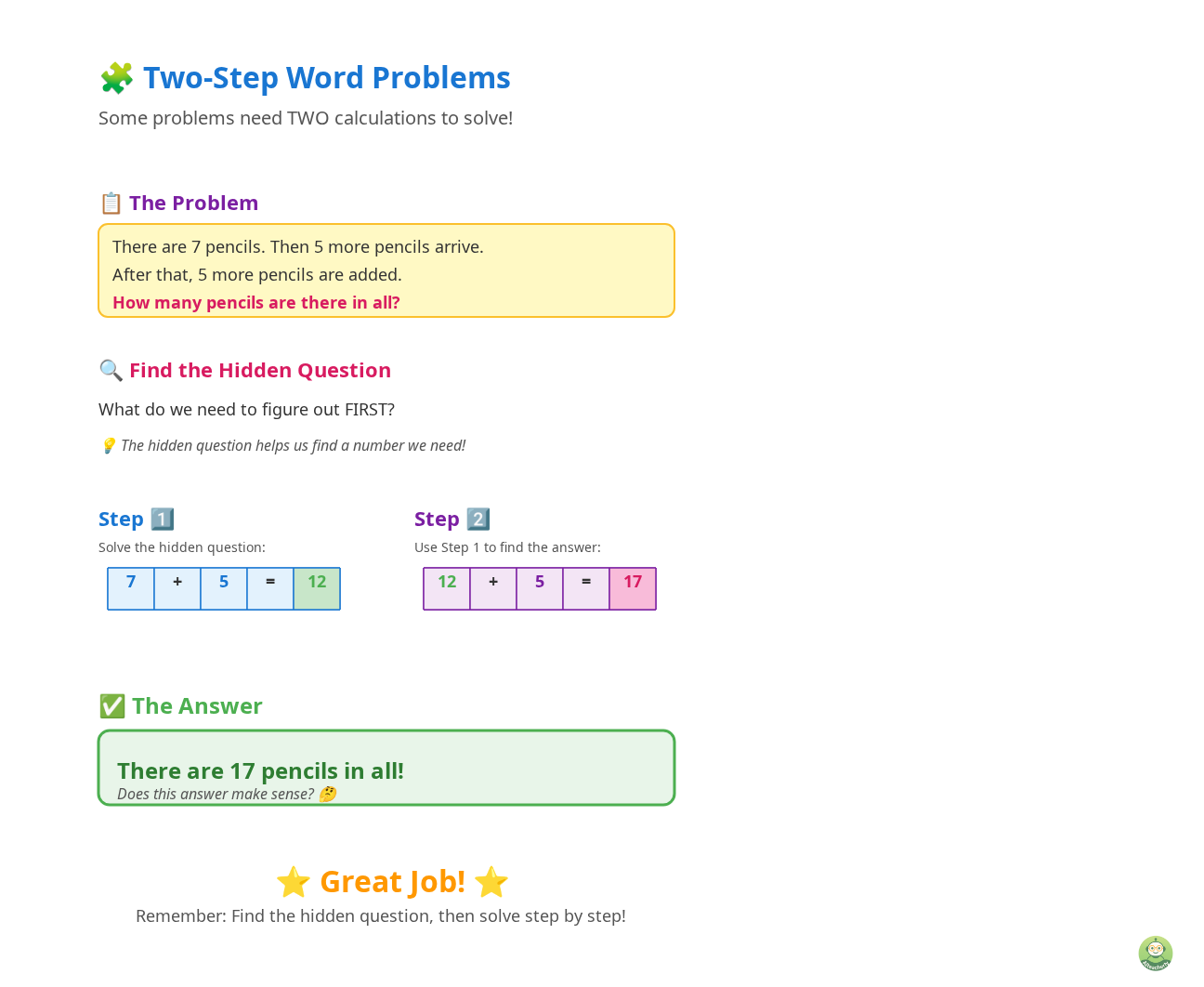
Practice Makes Progress: Interactive Problem-Solving in Action
Understanding the strategy is one thing; applying it consistently requires practice. The key is providing problems that are challenging enough to require two-step thinking but not so difficult that they overwhelm.
Real-World Contexts Make Math Meaningful
The best two-step word problems connect to situations children recognize: party planning, shopping, organizing collections, or helping around the house. When math feels relevant, engagement increases.
Here's an example of an interactive problem that brings these concepts to life:
Progressive Difficulty
Start with problems where both operations are the same (like addition followed by addition), then progress to mixed operations (multiplication followed by subtraction). This gradual increase builds confidence.
Beginner level: "Sam had 12 toy cars. He got 5 more for his birthday, then found 3 more in his closet. How many toy cars does Sam have now?" (Add, then add)
Intermediate level: "A store had 4 boxes with 6 pencils each. They sold 9 pencils. How many pencils are left?" (Multiply, then subtract)
Advanced level: "A baker made 5 trays with 8 muffins each. She sold 17 muffins in the morning and 12 more in the afternoon. How many muffins are left?" (Multiply, subtract, subtract)
How Much Practice Is Enough?
For most 3rd graders, 3 to 5 problems per day is sufficient. Short, consistent practice sessions beat long, infrequent cramming. Celebrate progress over perfection, and remember that mistakes are valuable learning opportunities.
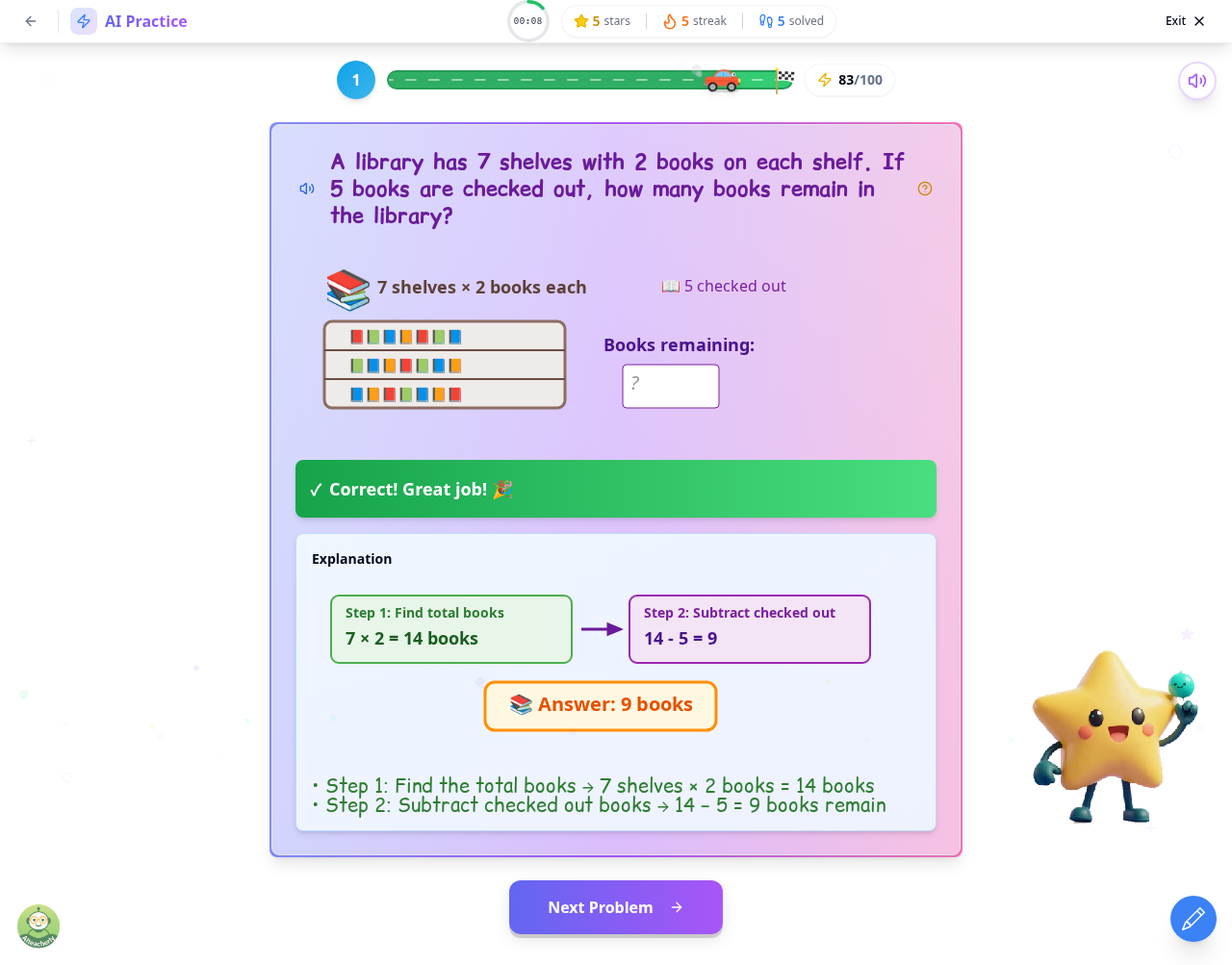
Common Mistakes Kids Make (And How to Avoid Them)
Understanding where children typically stumble helps you provide targeted support. Here are the most common mistakes and how to address them:
Mistake #1: Rushing to Calculate
Many children grab the numbers they see and immediately start computing, without fully understanding the problem. This leads to using wrong operations or numbers.
Solution: Enforce a "no pencil" rule for the first read. Have your child explain the story in their own words before touching any numbers.
Mistake #2: Skipping the Hidden Question
Children often try to jump straight to the final answer, missing the crucial intermediate step entirely.
Solution: Make finding the hidden question a required step. Have them write it out: "Hidden question: ___________" before any calculations.
Mistake #3: Wrong Operation Order
Even when children identify both operations correctly, they sometimes perform them in the wrong sequence.
Solution: Encourage step-by-step writing. Circle the answer to step one before moving to step two. This visual separation prevents order confusion.
Mistake #4: Not Checking Reasonableness
Children often accept answers that don't make logical sense (like ending up with more items after giving some away).
Solution: Always ask: "Does this answer make sense in the story?" Model this thinking aloud. If the character gave things away, the final number should be smaller than what they started with.
Mistake #5: Misreading the Problem
Small words make big differences. "Each" versus "in all" completely changes the required operation.
Solution: Have your child underline key words before solving. This slows down reading and improves comprehension.
Key Takeaways
- Every two-step word problem contains a hidden question that must be answered first before solving the main question
- Teach children to identify operation clues: words like 'each' and 'groups of' signal multiplication, while 'left' and 'gave away' signal subtraction
- Use the four-step method: Read, Find the Hidden Question, Solve Step by Step, and Check for Reasonableness
- Short daily practice (3-5 problems) is more effective than long, infrequent sessions
- Common mistakes include rushing to calculate, skipping intermediate steps, and not checking if answers make sense
- Real-world contexts like party planning and shopping make word problems more engaging and meaningful
- Celebrate progress over perfection; struggling with multi-step problems is a normal part of mathematical development
Frequently Asked Questions
What is a two-step word problem in 3rd grade math?
A two-step word problem requires two separate calculations to find the answer. For example, first multiplying to find a total, then subtracting to find what's left. These problems combine multiple operations in one story scenario.
How do I teach my child to identify the hidden question?
Have your child ask: 'What do I need to figure out before I can answer the final question?' The hidden question is the intermediate step that connects the given information to the answer. Practice writing it out before solving.
Why does my child struggle with multi-step word problems?
Multi-step problems require holding multiple pieces of information in working memory, choosing correct operations, and executing steps in order. This cognitive leap is one of the biggest challenges in elementary math, and struggling is completely normal.
What operations do two-step word problems use?
Two-step word problems can use any combination of addition, subtraction, multiplication, and division. Common combinations include multiply-then-subtract (like finding a total then removing some) or add-then-add scenarios.
How can I tell if my child's answer is reasonable?
Ask: 'Does this make sense in the story?' If items were added, the total should increase. If items were removed, it should decrease. If the answer contradicts the story logic, there's likely an error somewhere.
Should my child write out both steps or solve in their head?
For learning, always write out both steps. This prevents mistakes from wrong operation order and builds good habits. As skills develop, some mental math is fine, but showing work helps catch errors.
How many two-step word problems should my child practice daily?
Three to five problems per day is ideal for most 3rd graders. Short, consistent practice beats long cramming sessions. Focus on understanding over speed, and gradually increase difficulty as confidence builds.
What are common mistakes kids make with two-step problems?
The biggest mistakes are: rushing to calculate without understanding the problem, skipping the hidden question step, performing operations in wrong order, and not checking if the answer makes sense in context.
Ready to give your 3rd grader hands-on practice with two-step word problems? Try the interactive Two-Step Word Problems lesson on AI Teacherly, where colorful visuals and step-by-step guidance make multi-step math click!